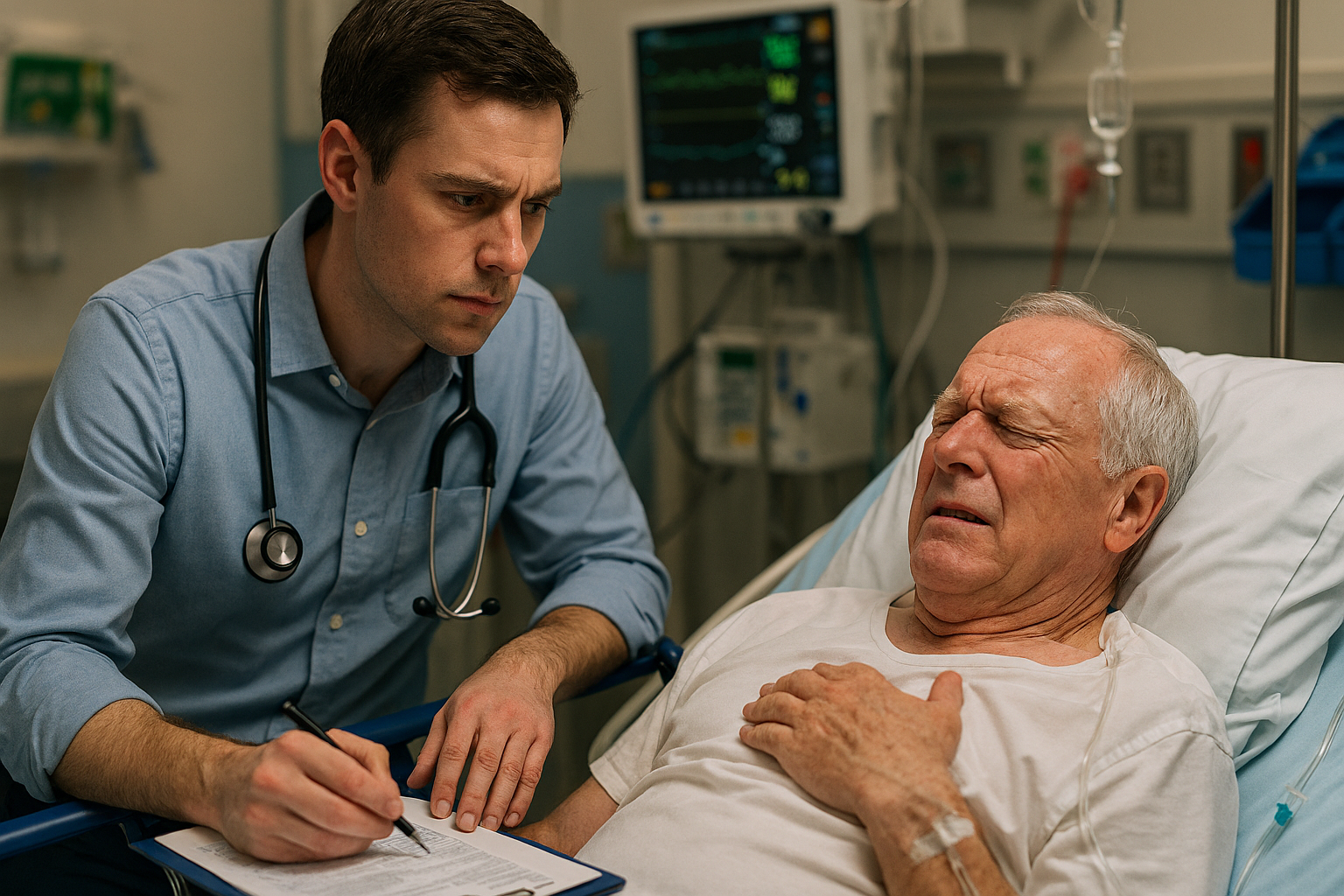
It’s 08:15 on a busy weekday morning when the red phone rings in the Emergency Department. You’re the Foundation Year doctor covering the majors area, working alongside a senior nurse and an emergency medicine registrar. The call is from the ambulance service: “Fifty‑eight‑year‑old male, central chest pain, ongoing 45 minutes, ECG concerning for STEMI. ETA four minutes.”
You feel the familiar surge of adrenaline. You run through the basics in your mind-ABCDE, analgesia, antiplatelets, cannulae, bloods, repeat ECG, cardiology referral. The resus bay is prepared.
The paramedics wheel the patient in. He is pale, sweating, gripping his chest. You introduce yourself quickly but clearly, maintaining calm even though the room feels charged.
- Airway: Patent
- Breathing: RR 24, oxygen saturations 95% on air
- Circulation: Pulse 110, BP 92/60
- Disability: Alert but anxious
- Exposure: No other obvious causes of pain
The paramedics hand over an ECG showing ST‑elevation in the anterior leads. This is a classic acute myocardial infarction.
You confirm the ECG changes yourself – your hands are steady, but you’re aware of your heart beating faster than usual. You know that every minute of delay means more heart muscle lost.
You prescribe:
- Aspirin
- A second antiplatelet
- Morphine and antiemetic
- High‑flow oxygen only if saturations drop
- IV access and bloods
You repeat the ECG to confirm the diagnosis. The registrar agrees: this is a primary PCI candidate.
You call the on‑call cardiology team. Your voice is calm and structured as you give the handover, even though you can feel the pressure of the moment.
Cardiology accepts the patient immediately. You accompany the team as the patient is transferred to the catheter lab. The corridor feels strangely long. The patient asks you quietly, “Am I going to be okay?” You reassure him honestly but gently: “You’re in the right place, and the team is ready for you.”
As the doors close behind him, the intensity of the last fifteen minutes catches up with you. You take a slow breath before heading back to A&E. Another ambulance is already on the way and your next patient is waiting…