Dr Dean Eggitt

Dr Dean Eggitt

GP | Teacher | Politician | Speaker

🩺 Clinical Reflection Case: Myocardial Infarction

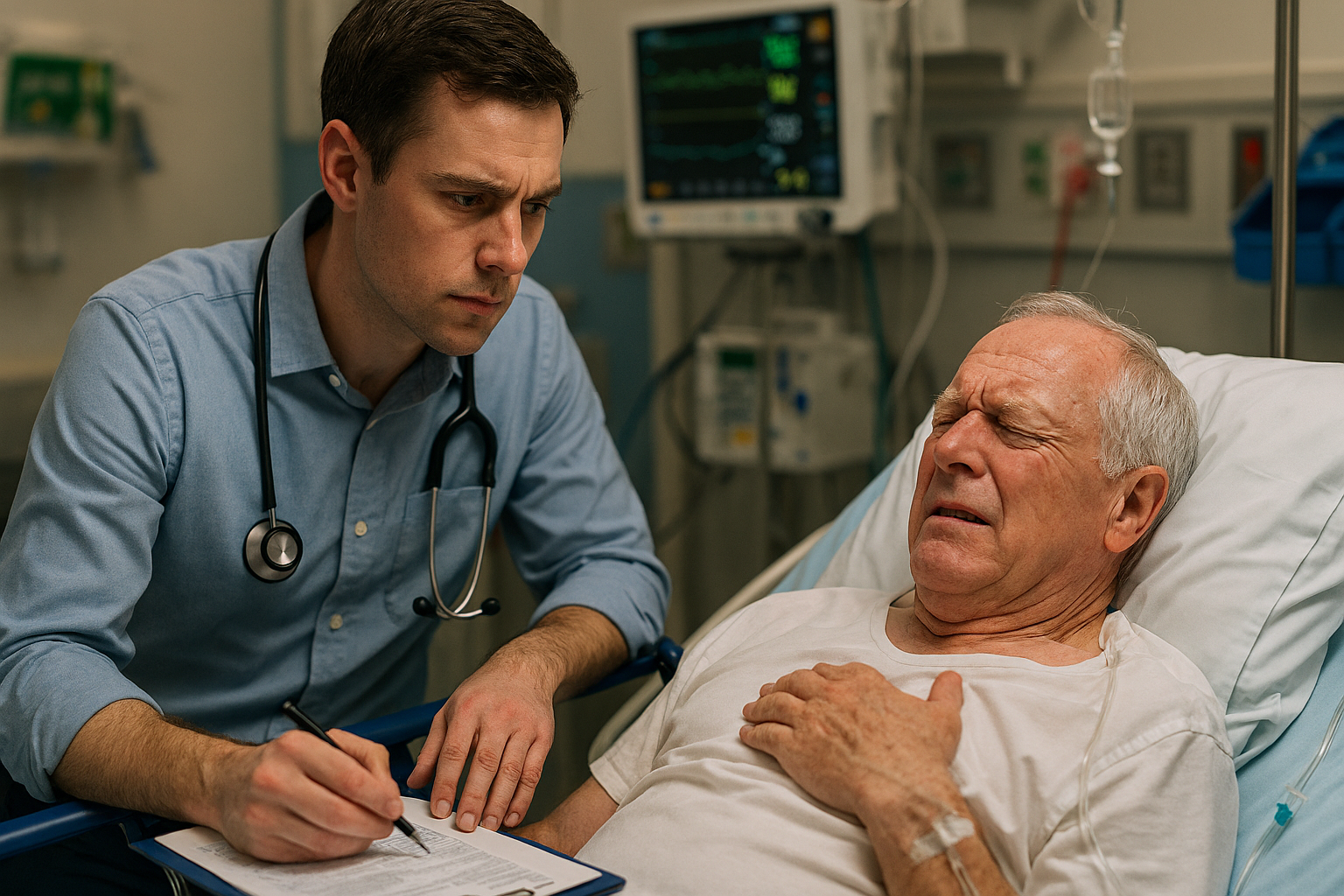
It’s 08:15 on a busy weekday morning when the red phone rings in the Emergency Department. You’re the Foundation Year doctor covering the majors area, working alongside a senior nurse and an emergency medicine registrar. The call is from the ambulance service: “Fifty‑eight‑year‑old male, central chest pain, ongoing 45 minutes, ECG concerning for STEMI. ETA four minutes.”

You feel the familiar surge of adrenaline. You run through the basics in your mind-ABCDE, analgesia, antiplatelets, cannulae, bloods, repeat ECG, cardiology referral. The resus bay is prepared.

The paramedics wheel the patient in. He is pale, sweating, gripping his chest. You introduce yourself quickly but clearly, maintaining calm even though the room feels charged.

  • Airway: Patent
  • Breathing: RR 24, oxygen saturations 95% on air
  • Circulation: Pulse 110, BP 92/60
  • Disability: Alert but anxious
  • Exposure: No other obvious causes of pain

The paramedics hand over an ECG showing ST‑elevation in the anterior leads. This is a classic acute myocardial infarction.

You confirm the ECG changes yourself – your hands are steady, but you’re aware of your heart beating faster than usual. You know that every minute of delay means more heart muscle lost.

You prescribe:

  • Aspirin
  • A second antiplatelet
  • Morphine and antiemetic
  • High‑flow oxygen only if saturations drop
  • IV access and bloods

You repeat the ECG to confirm the diagnosis. The registrar agrees: this is a primary PCI candidate.

You call the on‑call cardiology team. Your voice is calm and structured as you give the handover, even though you can feel the pressure of the moment.

Cardiology accepts the patient immediately. You accompany the team as the patient is transferred to the catheter lab. The corridor feels strangely long. The patient asks you quietly, “Am I going to be okay?” You reassure him honestly but gently: “You’re in the right place, and the team is ready for you.”

As the doors close behind him, the intensity of the last fifteen minutes catches up with you. You take a slow breath before heading back to A&E. Another ambulance is already on the way and your next patient is waiting…
Junior members of the medical team are usually first to attend and manage a medical emergency in a hospital. It is normal for the situation to be intense and stressful. The sounds, sights and smells can linger long in the mind after the incident has passed. What is your realistic perception of how this might affect you and your family?

7 Responses

  1. I understand that responding to intense medical emergencies may sometimes affect my mood and energy at home, and I will need to be mindful of managing stress to protect both my wellbeing and my family life.

  2. Junior doctors may experience fatigue and difficulty switching off after intense emergencies. At home, you might be quieter or more distracted. However, clear work–life boundaries would help minimise impact on wellbeing and family life.

  3. if i do not manage my emotions well, i may experience burn out but being around family is bound to prevent that. they are here to help, but dumping it all on them does not solve the problem in itself. it instead encourages me to reflect and seek support, which is vital for being a doctor

  4. Experiencing such high-anxiety situations on a regular basis could become very emotionally draining, potentially causing burnout or mood swings even out of the job. This, in addition to the limited personal time available as a junior doctor, could seriously strain relationships with family and friends. This can be mitigated somewhat with boundaries surrounding work/life balance but this is a career that will always follow you home to an extent.

  5. It is an intense environment and patients come in and out of your care quickly but they don’t leave your mind as soon as they leave your care. It can be quite difficult to process after you’ve been through that and you are expected to just move on to the next patient and keep on going. At home is when you can properly decompress and process what has happened. I like writing things down to get them off my mind at the moment and I come back to it when I’m ready to process it. It could distance you from your family if you haven’t got a system to process and deal with your emotions.

  6. I think it definitely impacts the perceptions of family and having to deal with outcomes and stress from emergency’s but also not to let it impact the time you spend with family too much because although work is so important having people around you is also extremely important.

Leave a Reply

Your email address will not be published. Required fields are marked *